
Open Science
الخطوط العريضة للقسم
-
This site has been prepared by PublicHealth.Africa to provide resources about Open Science to the editors of journals that might publish articles on public health as well as to researchers who might want to publish their research in an open format.
Note: if you want to gain a certificate for completing this course, you will have to be given an account by the administrator or create an account through the feedback form on the site home page and log in as a student.
The objectives are for:
- All to understand the concepts, advantages and disadvantages of Open Science in relation to public health research
- Journal editors to know how to set up your journal for open publising
- Researchers to know how to submit your research paper and the underlying data so that they are freely available for open access
- All to discuss how to explore, develop and advocate for new approaches to the open publication of research and the underlying data
A definition
From UNESCO: Open science is a set of principles and practices that aim to make scientific research from all fields accessible to everyone for the benefits of scientists and society as a whole. Open science is about making sure not only that scientific knowledge is accessible but also that the production of that knowledge itself is inclusive, equitable and sustainable.
Here is a nice graphic which demonstrates many of the features of Open Science
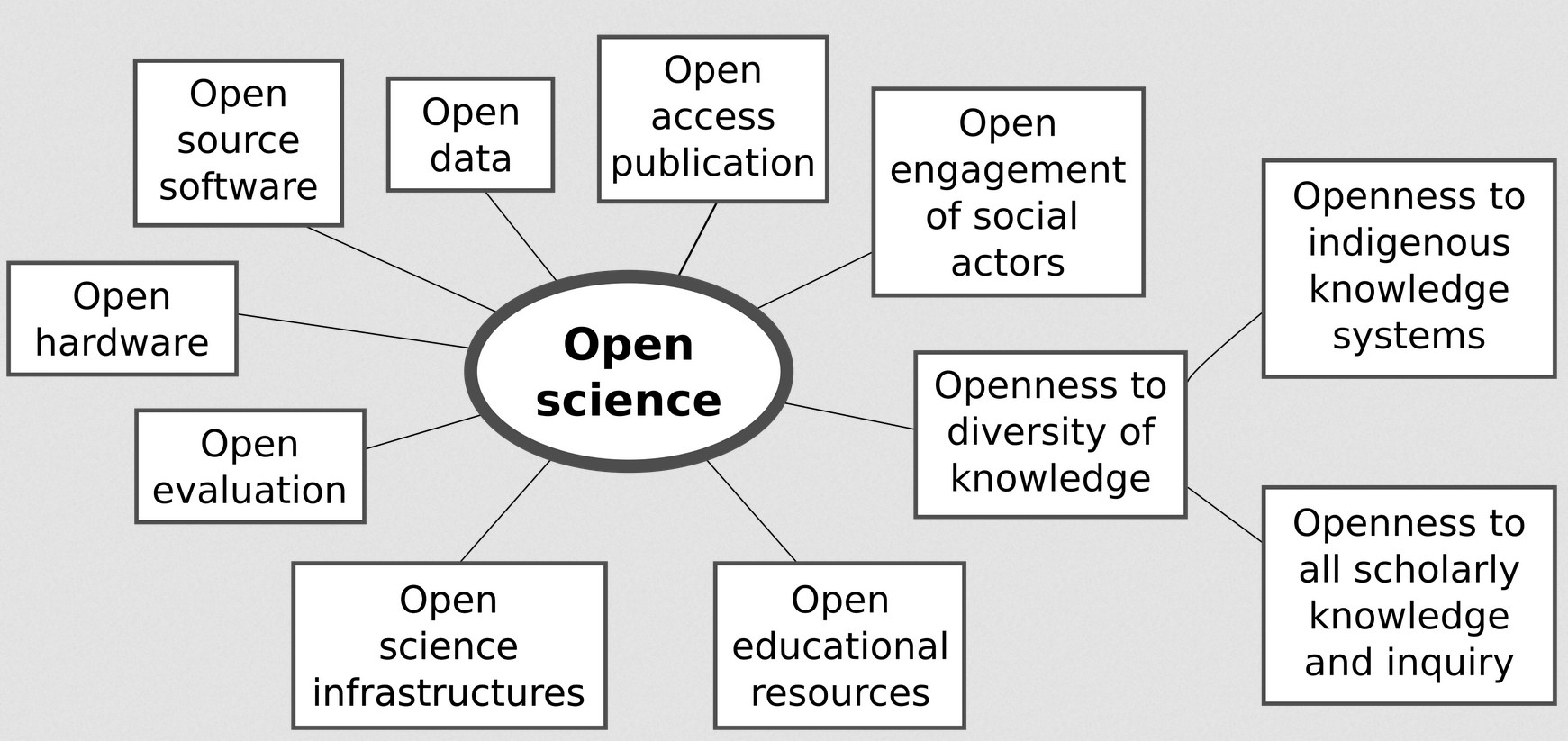
From Morrison, Wikimedia Commons, Based on the presentation by Ana Persic, Division of Science Policy and Capacity-Building, UNESCO (France) to Open Science Conference 2021. Licensed under the Creative Commons Attribution 4.0 International
In this course, we will focus on these major categories: Open scientific publications; Open research data; Open education; and Open infrastructure. We will also discuss the implications of Artificial Intelligence on Open Science, and introduce the idea of broadening the concept of Open Science from Access to include Distribution - designed to reduce the barriers to the implementation of Open Science.
Open Science and knowledge equity
Openness is a key component of how to distribute both access to knowledge and its production equitably. This is discussed in detail in the open access book Distributing Knowledge: Openness, Equity, and Higher Education Transformation.
How to navigate the course
Each section comprises a set of resources that we think you will find interesting - click on the collections of resources in each section. There is a forum in each topic for reflection.
We encourage you to reflect on what you have learned or comment on the course. When you click on the hyperlink in each topic labelled reflection, you will be able to add a new topic or respond to a previous one. You may want to share your learning from this and other readings, comment on the topics from your own experience, comment on others' posts, or provide feedback on how we can improve the content and presentation.
In the final section you will see that you can gain a Certificate of Completion - the requirements for this are to post a reflection in each section (however, you must enrol as a student first).

This work is licensed under a Creative Commons Attribution 4.0 International License.
-
A good way to start thinking about this is to look at the various components shown in the picture in the introduction above. Here is another:
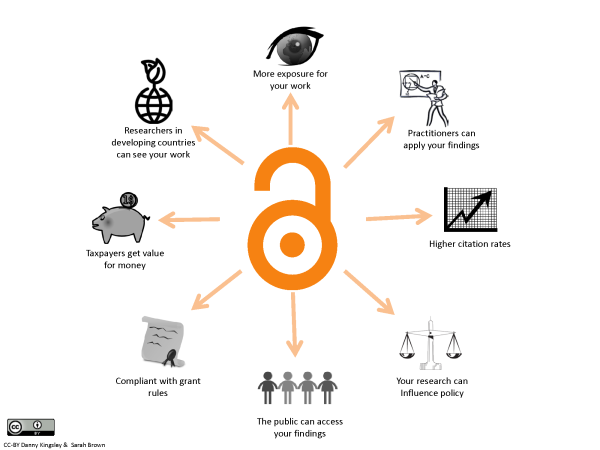
From Danny Kingsley & Sarah Brown licensed under the Creative Commons Attribution 4.0 International license.
One of the aspects confronting anyone exploring the concepts of Open Science, is that while the concept is reasonably clear - science should be available to all who might benefit from it - there are many different aspects from which the concept can be viewed. Here is one from Paul Stacey taking the viewpoint of Open Education which places it in the context of higher education (relevant to anyone accessing this course!):
Open education is only one of many forms of open in higher education. It is part of a broader spectrum of opens including open research, open science, open access, open data, open innovation, open hardware, open source, and open governance. Each open provides additional autonomy. Combining them together creates a synergistic effect that maximizes autonomy for the good of all involved.
This links nicely to yet another definition—that of open access, as described by Open Education Global:
Open Access (OA) refers to research published in a way that is digital, online, free of charge, and free of most copyright and licensing restrictions. OA removes price barriers such as subscriptions and pay-per-view fees giving researchers, students, and public access to research. As most research is publicly funded OA ensures the public has access to what is funded. OA makes research discoverable, available and reproducible for the advancement of science. When used for teaching and learning Open Access articles are a form of OER [Open Educational Resources] (Open Access (OA)).Why Open Science
Here is another nice graphic that covers many of the benefits:
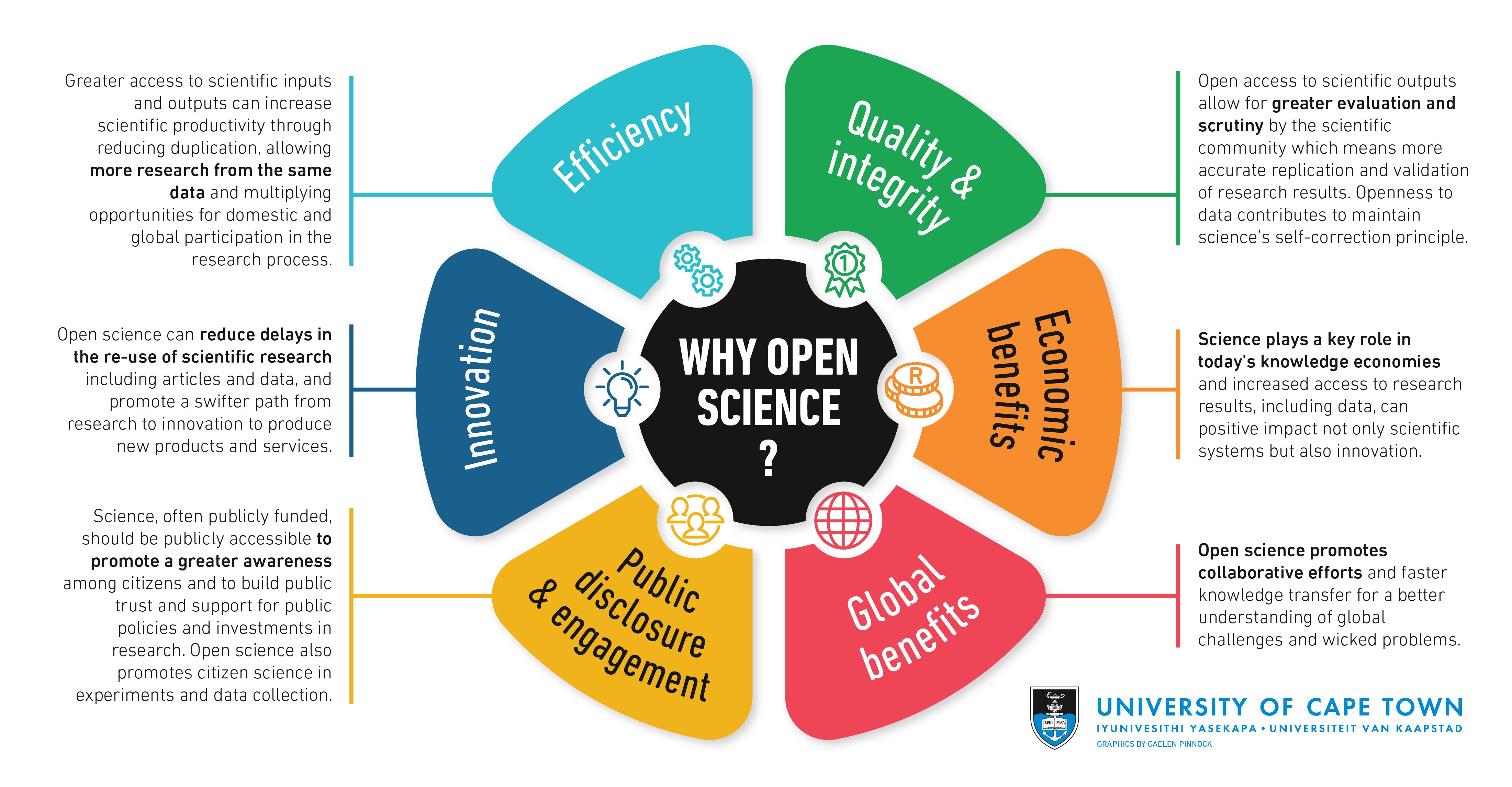
By Gaelen Pinnock, CC BY-SA 4.0
How the response to the COVID pandemic illustrated the value of Open Science:
The response to COVID was shaped by open sharing of data. This was appreciated, even in the early days, as shown in this paper: Open science: after the COVID-19 pandemic there can be no return to closed working. The authors identify these issues:
- Science is largely publicly funded but not publicly accessible.
- When science is not openly accessible, it does not, and cannot, reach everyone who needs it.
- Research relevant to the COVID-19 pandemic has been made open access, which has enabled a unified and rapid global scientific response—but COVID-19 open access agreements are likely to be temporary.
- Open access to all research is an ongoing issue. If we are to advance our global effort to achieve the Sustainable Development Goals, we must reframe what the standard is.
And, after a full discussion and set of suggestions, the authors summarise as follows:
The COVID-19 pandemic is leading to rapid rethinking of how many parts of society function. It should also be the catalyst that finally lays to rest the myth that closed research as the norm is acceptable, either morally, economically or technically. We need a whole-of-system coordinated reshaping from grassroots initiatives through to national policy and political commitment, that aligns with international initiatives—such as the Sustainable Development Goals for which access to information is key—and which are sensitive to national needs. Though there are many issues to work through, as for the other challenges we are facing with COVID-19, these issues can be solved if we only choose to do so. Arguably, we can’t afford not to.
A particular problem for the Global South
Due to a relative scarcity of research capacity, much of the Global South lacks locally relevant and globally valid research on its populations. Research publications from the Global South are low relative to the Global North. Despite a 51% increase between 2008 and 2014, in 2014 sub-Saharan Africa produced only 1.4% of the world’s share of scientific publications. Research outputs from Africa have mainly been limited to 10 countries, with more than 90% of total publications in Africa from these countries.
Reasons for this poor research output may include lack of access to scientific literature, and open publishing provides one way to improve the situation.
Funding of research in the Global South is also low in comparison with that in the Global North.
Compounding this issue is that research into Open Science itself is also biased against the Global South. Nazarovets and da Silva find that
Geographically, open science research is led by the USA (2,058 publications; 32.9%), followed by the UK (977; 15.6%), Germany (922; 14.8%), Canada (691; 11.1%), Australia (496; 7.9%), The Netherlands (516; 8.3%) and several other European countries.
The issue is nicely covered in the paper Why Are African Researchers Left Behind in Global Scientific Publications? – A Viewpoint.
In a study of 174 journals from 13 African countries reporting on public health research, the majority of articles were freely available to download. However, only a minority were indexed so could be easily found by other researchers or policy makers. These findings stimulated the development of this course.
-
ينبغي للطلبةمعاينة
Very nice historical account of the development of open publishing
-
-
Commercial publishers who make large profits from academic publishing, and a number of institutional reward systems for academic publication in their journals have the result of restricting access to scientific publication by those who might find the results of use and put them into practice. The key importance of open publishing is to reduce the power of commercial publishers by opening up access in order to increase knowledge equity. This extends to opening the research process to include under-represented populations, again increasing knowledge equity (we will return to this issue elsewhere.)
Here is a nice article from the Gates Foundation: ‘Who Loses when Scientific Research is Locked behind Paywalls?’:
Journal subscriptions can cost hundreds to thousands of dollars a year for individual access and multiple millions of dollars for institutional access. Fees for publishing outside a paywall, known as article processing charges (APCs), can be as much as US$12,000 for a single article. Even the most privileged institutions struggle to afford both access to and publication in the large number of journals globally.
It’s even more frustrating because governments and foundations fund much of the world’s health-related research and journal articles are peer-reviewed by scientists for free, yet many journals continue to limit access to research findings through restrictive policies. It is small wonder that academic publishing is one of the most profitable industries in the world!A paper titled Open access research outputs receive more diverse citations summarises:
[...] we found a robust association between open access and increased diversity of citation sources by institutions, countries, subregions, regions, and fields of research [...] provides new evidence at global scale of the benefits of open access as a mechanism for widening the use of research and increasing the diversity of the communities that benefit from it.
A study performed by PublicHealth.Africa and LIBSENSE explored the open publishing practices of African journals expected to publish articles on public health. You can link to the published paper (of course it is published as open access itself) Open access publication of public health research in African journals, and here are some of the key findings:
One hundred and seventy four journals were identified from 13 African countries, 55% of the publishers were professional societies, and 52% of the journals were published only twice a year or less. While 64% were freely available to download, only 39% had a Creative Commons Licence, and only 22%, 9% and 21% were indexed in PubMed, MEDLINE or the Directory of Open Access Journals respectively, and only 58% had a Digital Object Identifier. Fifty one percent of the journals levied full Article Processing Charges – 36% of these the journals stated that these charges could be fully or partially waived.
The 6 countries above the group’s median Gross Domestic Product (GDP) published 145 journals, while the 7 countries at or below the median GP published 29 journals. Journals from countries at the median GDP or below were less likely to charge full Article Processing Charges than journals from countries above the median GDP, 28% and 55% respectively (chi-square 7.36; p=0.007).
The study concluded:
Improved opportunities are required for African researchers to publish their findings in local journals, allowing research users to access these findings.
Institutional reward systems produce barriers to open publishing
The reward system is nicely summarised in this paper The Scientific Game:
Publishing in top journals is another factor crucial for career progression, which is why many strive to do so. Publication in journals with prestigious brand names and high journal impact factors (JIFs, used as a proxy for quality), brings recognition, citations and career rewards, motivating many researchers to compete.
The paper goes on to caution about some of the dangers of the Open Access system:
If the publication is financed through article processing charges, publication volume becomes directly linked to editorial revenues and profits. This creates incentives for some publishers to maximize the number of accepted papers while saving on editorial scrutiny and peer review. In this way, Open Access can generate a perverse economy in which the argument of accessibility and public knowledge is used to extract rents from researchers, institutions, and public funding systems without contributing meaningfully to scientific quality or the cumulative stock of knowledge.
The Publish/Review/Curate model
Unlike the more traditional method where a journal will send a submitted paper for expert peer review and only publish if the reviews are positive, the model allows publication of the paper, then arrange review - and to increase transparency the reviews will also be openly published. The initial publication maybe be termed a preprint, and can be given a persistent identifier (a Digital Object Identifier, DOI, or a decentralised Archival Resource Key, ARK); this will enable indexing by various bibliographic databases, and improve discoverability by search engines, provided that the journal has been approved by those databases. Some journals will only assign a digital identifier if the review is acceptable. The usual shorthand for this model is Review-Publish.
The final step 0f the Publish-Review-Curate model is curation, which refers to a set of activities that organise and validate research outputs after they are made openly available.
Open Research Europe likes the model:
PRC introduces much greater openness and transparency in publishing by making all versions of papers, their reviews, and comments open to the public. It means research is made publicly available as soon as each output is delivered. It’s also an approach that caters to the diverse outputs that ORE welcomes. And finally, we also opt to use it because it’s researcher driven and facilitates community engagement – two important advantages for advancing open, collaborative research.
and commenting on the above post, Serhii Nazarovets agrees:
Perhaps the most important shift here is treating publication as a transparent process rather than a single final event. Making versions, reviews, and discussion visible also makes the evolution of research part of the scholarly record.
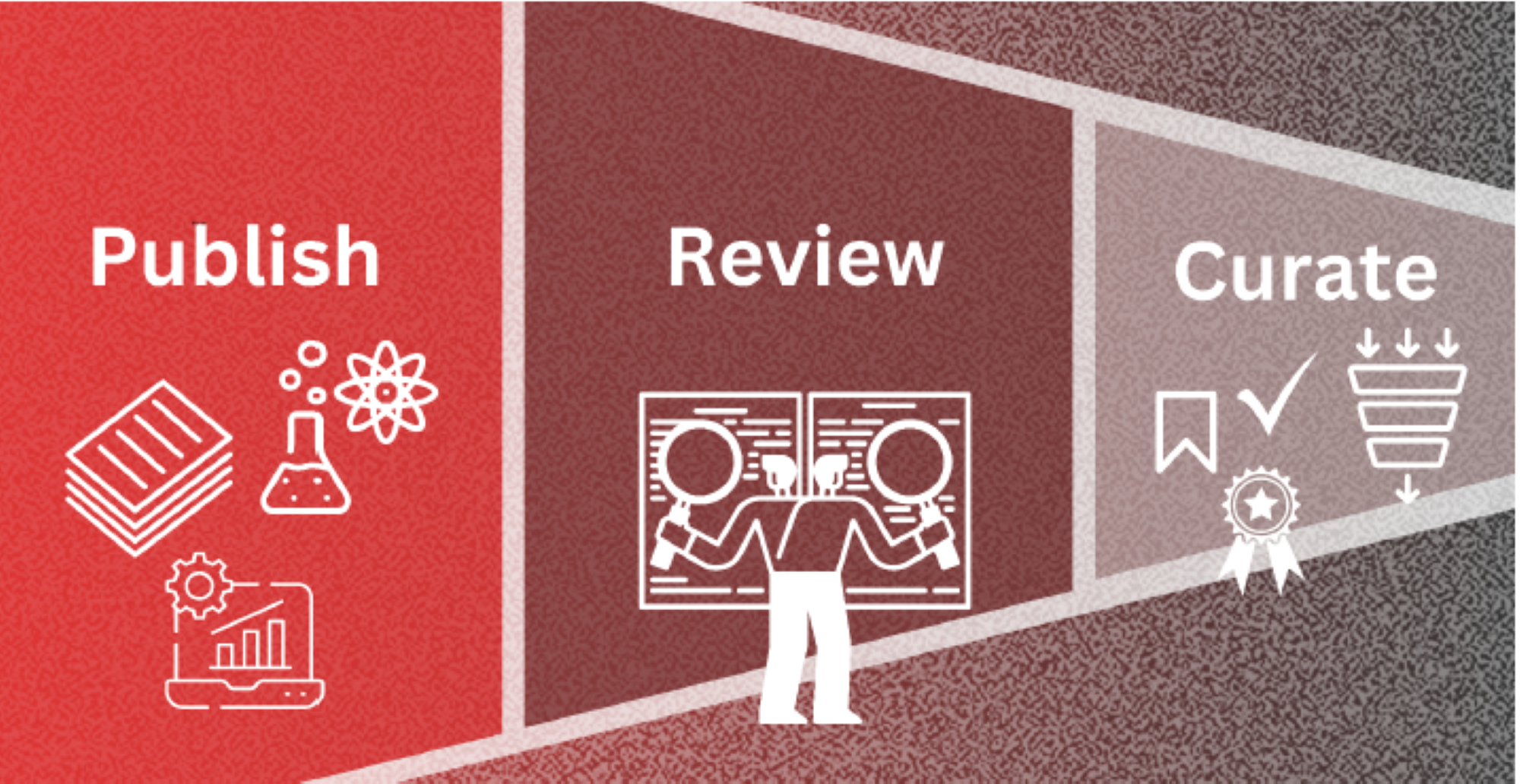 Publish-
The Publish-Review-Curate model of publication. Corker et al., 2024, CC-BY 4.0.
Examples of open publishing
The Coalition for Open Access Publishing of Public Health in Africa (COPPHA), supported by the West and Central African Research and Education Network (WACREN). The aim is to build both capacity for peer reviewing among African Public Health researchers though online courses and the development of new open publishing options through an open repository for preprints, BAOBAB, and open reviews PublishNow.
The Diamond Open Access model of open publishing offers a major advance in open publishing:
Coalition S describes this as[…] a scholarly publication model in which journals and platforms do not charge fees to either authors or readers. Diamond Open Access journals are community-driven, academic-led, and academic-owned publishing initiatives. Serving a fine-grained variety of generally small-scale, multilingual, and multicultural scholarly communities, these journals and platforms embody the concept of bibliodiversity.
For all these reasons, Diamond Open Access journals and platforms are equitable by nature and design, and offer a preferable open access publication model.
Note: There is much more detail of open publishing in the Diamond open access book Distributing Knowledge: Openness, Equity, and Higher Education Transformation in Chapter 3: Open publishing, reviewing and curating.
You should also read about licencing copyright for open access publications - a good guide comes from Creative Commons.
There is also a comprehensive Good practice advice for OA publishing in Africa from EIFL (Electronic Information for Libraries) who have also joined a landmark statement in May 2026 to call on policymakers to remove barriers and accelerate the transition to Open Science across Europe. This statement concludes:
Achieving open science at scale will require the mobilisation of a diverse ecosystem of actors and complementary tools, including policy alignment, incentives, infrastructure, and community-led initiatives. An aligned and enabling policy environment for open science, open public infrastructures for sharing research and enhanced open science skills are key objectives pursued by EIFL through its Open Access Programme.
-
Here is an excellent summary of the rationale for open access to research data:
Open access to research data means that data from research is made available for others to find, review, and reuse, to the extent possible. This work is guided by the principle of “as open as possible, as closed as necessary” and is based on managing data in accordance with the FAIR principles.
The summary continues:
To be usable by others, data often need to comply with the so-called FAIR principles: they should be Findable, Accessible, Interoperable, and Reusable. However, these are general principles, not universal criteria. Given the varying requirements and needs of different research areas, the FAIR principles must be adapted to the scientific disciplines, fields, and practices in which they are applied.
The Open Access Network helps us understand the data we are talking about:
Research data come in a wide variety of forms and types. They comprise all (digital) data generated during the scientific process, for example, through measurements, simulations, interviews, source work, or code and software. The management of these research data has become an essential element of good research practice and is anchored in policies at many institutions. Whereas in the past, research data were often neglected as a mere accessory to publications, made available as a matter of form, or provided only upon request, a strong trend towards the independent and prominent publication of research data in an open format is apparent. In some disciplines, the publication of data is on its way to becoming the main outcome of scientific work.
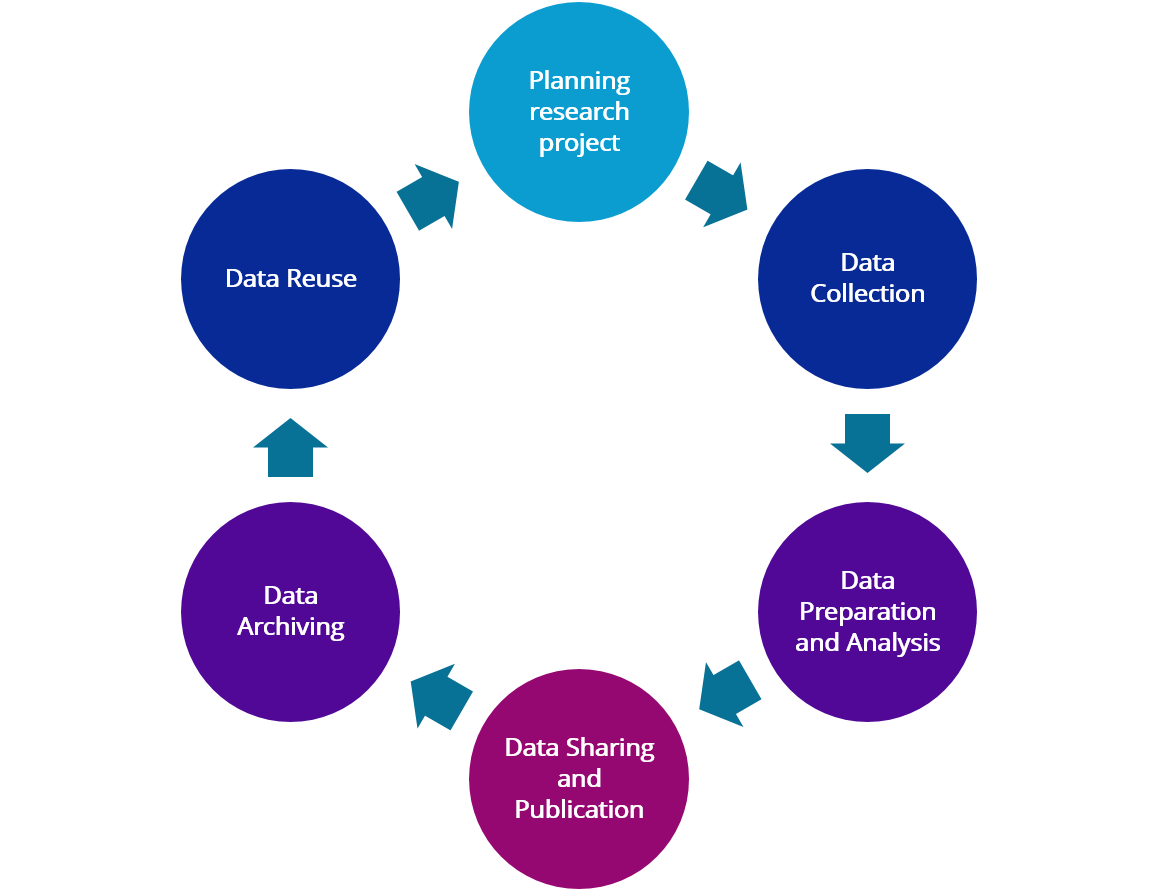
The figure depicts the Research Data Management Cycle from the Open Access Network CC BY 4.0 International.
Philosophical underpinnings
Where research is conducted using public funds, the resulting data, as for resulting publications, should be publicly available rather than hidden behind paywalls.
Extending FAIR to CARE
The FAIR principles have been extended into CARE principles. As described by Yana Suchikova and Serhii Nazarovets:
The CARE Principles (Collective Benefit, Authority to Control, Responsibility, Ethics) have emerged as a cornerstone for ethically managing data related to Indigenous peoples. Designed to complement the technical standards of FAIR (Findable, Accessible, Interoperable, Reusable), CARE emphasizes the cultural, ethical, and social dimensions of data stewardship. These principles ensure that data governance prioritizes community well-being, respects local values, and protects the rights of vulnerable groups. While initially focused on Indigenous data, CARE’s ethical imperatives can – and should – be extended to other vulnerable communities.
They describe the use of CARE principles as 'a universal standard for addressing the ethical complexities of data management in humanitarian crises and conflict-affected environments' - as in their current situation in war torn Ukraine.
As we will discuss later in this course, the just making science, including research data, open is not enough to ensure its equitable use. Ownership, ethics, power dynamics behind who gets access and the method of distribution all need to be considered in ensuring real openness.
-
Quoted in Chapter 6 of the open access book Distributing Knowledge: Openness, Equity, and Higher Educational Transformation:
Open Education encompasses resources, tools and practices that employ a framework of open sharing to improve educational access and effectiveness. By combining the traditions of knowledge sharing and creation with 21st century technology, Open Education wants to create a vast pool of openly shared educational resources, while harnessing today’s collaborative spirit to develop educational approaches that are more responsive to learners’ needs. Open Education seeks to scale up educational opportunities by taking advantage of the power of the internet, allowing rapid and essentially free dissemination, and enabling people around the world to access knowledge, connect and collaborate. Open allows not just access, but the freedom to modify and use materials, information and networks so education can be personalized to individual users or woven together in new ways for diverse audiences, large and small...
The chapter quotes Rory McGreal's articulation of the underlying concept:
‘publicly-funded research and educational content belongs to the people and should therefore be open and accessible to them’. He links this to being able to achieve Sustainable Development Goal (SDG) number 4: ‘Ensure inclusive and equitable quality education and promote lifelong learning opportunities for all’
The chapter also quotes from a collective voice of more than 50 academics who remind us that openness in education is more than just reducing barriers to access:
[…] the understanding of Openness in Education as a complex, multilayered concept intricately woven into an array of values. These range from aspects such as sharing, access, flexibility, affordability, enlightenment, barrier-removal, empowerment, care, individual agency, trust, innovation, sustainability, collaboration, co-creation, social justice, equity, transparency, inclusivity, decolonization, democratisation, participation, liberty, and respect for diversity (Abstract).
Open Educational Resources (OER)
David Wiley identified the 5 R's of openness:
Retain—the right to make, own, and control copies of the content.
Reuse—the right to use the content in a wide range of ways (e.g., in a class, in a study group, on a website, in a video).
Revise—the right to adapt, adjust, modify, or alter the content itself (e.g., translate the content into another language).
Remix—the right to combine the original or revised content with other open content to create something new (e.g., incorporate the content into a mashup).
Redistribute—the right to share copies of the original content, your revisions, or your remixes with others (e.g., give a copy of the content to a friend).UNESCO developed a set of recommendations on OER, which are useful in reminding us of their scope and the need for a licencing system:
1. Open Educational Resources (OER) are learning, teaching and research materials in any format and medium that reside in the public domain or are under copyright that have been released under an open license, that permit no-cost access, re-use, re-purpose, adaptation and redistribution by others.
2. Open license refers to a license that respects the intellectual property rights of the copyright owner and provides permissions granting the public the rights to access, re-use, re-purpose, adapt and redistribute educational materials.
3. Information and communications technology (ICT) provide great potential for effective, equitable and inclusive access to OER and their use, adaptation and redistribution. They can open possibilities for OER to be accessible anytime and anywhere for everyone, including individuals with disabilities and individuals coming from marginalized or disadvantaged groups. They can help meet the needs of individual learners and effectively promote gender equality and incentivize innovative pedagogical, didactical and methodological approaches.
4. Stakeholders in the formal, non-formal and informal sectors (where appropriate) in this Recommendation include: teachers, educators, learners, governmental bodies, parents, educational providers and institutions, education support personnel, teacher trainers, educational policy makers, cultural institutions (such as libraries, archives and museums) and their users, information and communications technology (ICT) infrastructure providers, researchers, research institutions, civil society organizations (including professional and student associations), publishers, the public and private sectors, intergovernmental organizations, copyright holders and authors, media and broadcasting groups and funding bodies.
OER range from individual resources through to whole courses with assessments and whole texbooks. Open textbooks have been shown to reduce costs for students considerably. There are a number of repositories through which you can access various OER - here is an extensive list of where you can find OER, but there are plenty of others.
The Creative Commons licencing system was developed to allow works under copyright to be used free of charge. They offer everyone a standardised way to grant permission for the use of their work. They provide permission for the use of resources according to various criteria. There are 6 licences, and a public domain dedication tool, varying in permissiveness from most to least permissive, and identify what a user can do with the work. You will see these components of a licence:
• CC: Creative Commons
• BY: credit must be given to the creator.
• SA: adaptations must be shared under the same terms.
• NC: only non-commercial uses of the work are permitted.
• ND: no derivatives or adaptations of the work are permitted.CC BY: This license enables reusers to distribute, remix, adapt, and build upon the material in any medium or format, so long as attribution is given to the creator. The license allows for commercial use. This book is published under this most permissive licence, and is an appropriate licence for OER.
CC BY-SA: This license enables reusers to distribute, remix, adapt, and build upon the material in any medium or format, so long as attribution is given to the creator. The license allows for commercial use. If you remix, adapt, or build upon the material, you must license the modified material under identical terms. This is also an appropriate licence for OER, although it does impose some limitations on reuse.
CC BY-NC: This license enables reusers to distribute, remix, adapt, and build upon the material in any medium or format for non-commercial purposes only, and only so long as attribution is given to the creator. This licence is also an appropriate licence for OER, although it limits commercial use—which in
any case would be against the spirit of openness.
CC BY-NC-SA: This license enables reusers to distribute, remix, adapt, and build upon the material in any medium or format for non-commercial purposes only, and only so long as attribution is given to the creator. If you remix, adapt, or build upon the material, you must license the modified material under identical terms. This licence is also suitable for OER, although it does impose some limitations on reuse.
CC BY-ND: This license enables reusers to copy and distribute the material in any medium or format in unadapted form only, and only so long as attribution is given to the creator. The license allows for commercial use. This licence should be avoided where possible for OER as it limits adaptation.
CC BY-NC-ND: This license enables reusers to copy and distribute the material in any medium or format in unadapted form only, for non-commercial purposes only, and only so long as attribution is given to the creator. This licence should be avoided where possible for OER as it limits reuse and adaptation. -
Creating opportunities for access to knowledge is only part of the requirements for the knowledge to be used. Unfortunately, there are many barriers, as discussed in this paper below (give reference)
Over the past two decades, Open Science has made significant progress in ensuring open access to scientific knowledge (Scotti et al., 2025). Open publications, open research data, open educational resources, open-source software and other components of Open Science have made the results of scientific research much more accessible to researchers and society. These practices are supported by international guidelines, funders’ requirements, and the policies of universities and research organisations.
Open access to knowledge does not in itself guarantee that it will be found, understood, trusted, adapted to the local context or actually put to use. In many areas of Open Science, barriers remain relating to institutional organisation, infrastructure, governance, incentive systems, capacity building and support for professional communities. As a result, openness does not always translate into the widespread adoption of open practices and the achievement of knowledge equity.
The figure below offers a framework for the journey from the creation of knowledge (which we elsewhere discuss should also be more 'open') to the equitable use of the knowledge created. We see that access is only part of this journey, and there should be anew dimension 'Open Science Distribution' to complement 'Open Science Access'. 'Open Science Distribution' is defined as: 'the institutional, organisational, infrastructural and governance arrangements that create the conditions under which openly available knowledge can be effectively discovered, trusted, adopted and sustained in practice'. The aim is to remove barriers between open access and the practical use of knowledge.
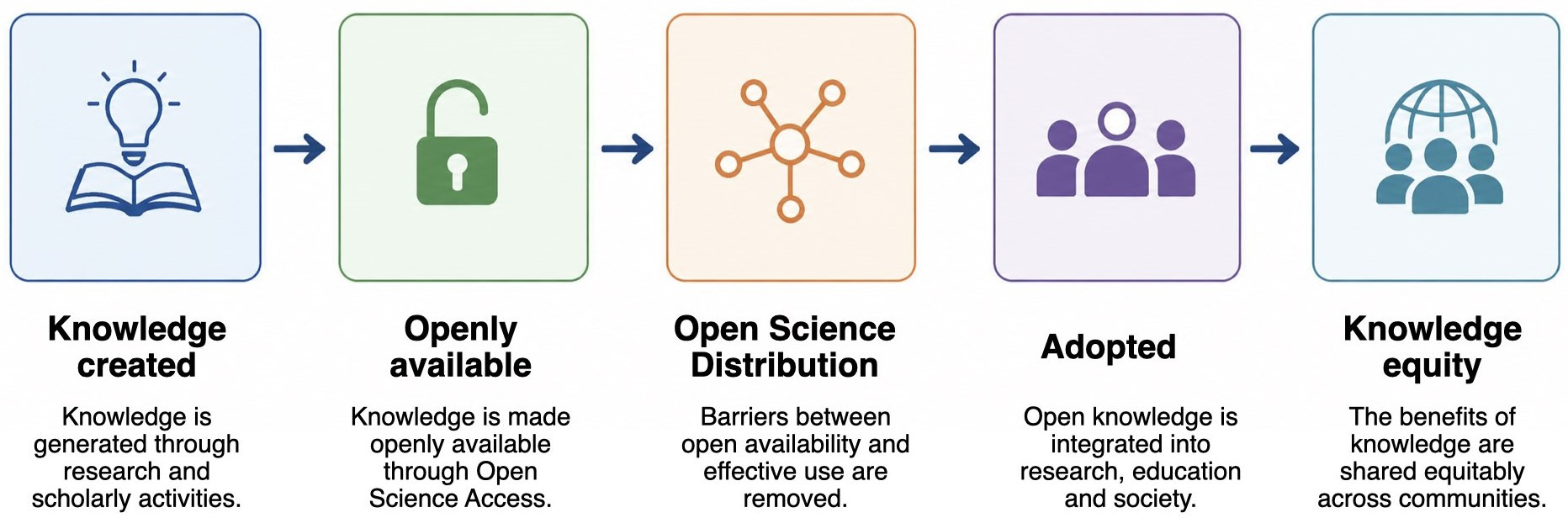
Figure 1. A conceptual framework of Open Science Distribution within the Open Science lifecycle.
-
The problem for Open Science from AI
A paper from COAR (the Confederation of Open Access Repositories) articulates the problem very nicely in Navigating the Uneasy Interdependence of AI and Open Science:
Artificial intelligence (AI) is proving highly disruptive to open science as it becomes both widely used in the analysis and production of scholarly literature and deeply embedded in the public information commons. On the one hand, researchers across all domains are harnessing the power of AI and machine learning to do things previously unimaginable – such as rapidly processing massive datasets or synthesising large corpora in many different languages – greatly accelerating scientific progress and leading to new discoveries. On the other hand, AI is seriously challenging some of the fundamental assumptions on which open science rests, putting the open science ecosystem at risk in ways that demand urgent attention.
Open Science and AI aren’t merely complementary, they are structurally interdependent. Open resources are the raw materials for training AI models and for their application; while well-functioning AI tools are increasingly critical for conducting groundbreaking research. Yet AI, as a major consumer of open science outputs, also brings with it attribution problems, the potential for information contamination, and aggressive automated traffic that strains the very infrastructure on which it depends. Left unaddressed, these pressures threaten to reverse much of what the open science movement has achieved.
Generative AI allows the creation of content that looks like a real research paper, but is fabricated. Journals can be misled, and false research published. As noted by the Center for Open Science:
The is relevant to licencing of open publications. We discuss licences which grant permission for the use of copyrighted openly published material elsewhere in this course, but this system falls down where the AI models just hoover up whatever they can find without the attribution which is the usual component of the licence. Should the AI models be able to access copyrighted material, and should they attribute the work which their models then produce?
AI and scholarly publication
Stephen Downes, in a provocative paper The Present and Future Landscape of AI in Scholarly Publishing makes the point that the arrival of AI will have a substantial impact on scholarly publishing. While AI has benefits, reducing operational costs and democratising access to academic resources, there are a number of concerns including accuracy, research integrity, and ethical issues.
AI should even make us re-think the role of journal publications.
Should AI itself be 'open'?
Within the AI sector there is a vigorous debate about whether the underlying program code should be open source to allow developers and users to see and modify it. While much of the argument is commercial to allow the big private companies to maintain ownership and profit from their models, there are other arguments. The proponents of open quote democratisation of access, transparency, the ability to innovate, and ability to maintain privacy, while the opponents quote safety, misuse, and the fear of loss of control.
-
There is a need for local research in the Global South to help provide an evidence base for policy development. This is particularly the case for public health, where improvements in the health of the population are required. Major causes of the problem include a relative lack of local capacity and leadership to perform research and the prevalence of ‘safari research’ conducted by academics in the Global North, which may have less impact on policy than locally generated research. Compounding this is the lack of opportunity for researchers to publish their findings in local journals with results readily available to other researchers or policymakers. Greater academic credit is currently given to researchers who publish in high-impact international than in local journals. Most international journals have either high article processing charges, or their contents are hidden behind paywalls.
Open access publishing has the potential to provide access to locally produced research, and has many advantages. As part of an initiative to help with the development of opportunities to publish local research, this site provides links to educational resources. We are also planning to offer mentoring opportunities to provide advice to those who would like to know more.
-
-
ينبغي للطلبةمعاينة
Online courses and tutorials on Open Access and research writing
-
-
-
There is considerable interest in Open Science, with a number of initiatives to encourage open access to research findings.
Many research funders now require the research that they sponsor to be published as open access with a Creative Commons licence.
This paper, Institutionalizing Open Science in Africa: Limitations and Prospects, is worth a read and concludes: "OS still remains a significant contributor in solving global problems, and thus a potent channel for Africa's development. Hence, institutionalizing OS in Africa should be on the forefront of science stakeholders in Africa more than ever before, especially due to the current pandemic."
A news item in Nature states "Open-access papers have drastically fewer lead authors from low-income regions than do paywalled articles, an analysis of tens of thousands of articles shows." The article puts part of the blame on Article Processing Fees (if the reader or their library does not pay the publisher, the author or their institution or funder has to pay). Nature charges up to $9000 to publish a research article in open access format!
This is a very big topic - some international publishing companies make massive profits, while using free labour provided by editors and reviewers.
There are open source publishing platforms availabe:
- Open Journal Systems-an open source software application for managing and publishing scholarly journals- https://pkp.sfu.ca/ojs/
- Modern Scholarly Publishing Platform. A platform for Journals, Micropubs, Preprints, PRC, Weblabs and more –https://kotahi.community/
There are some interesting and new publishing formats, where results (and the data from which the results were derived) are posted on repositories and the peer review comes later.
The paper Next Generation Repositories from the Confederation of Open Access Repositories offers a good perspective on the importance of repositories.
Sciety aims "to grow a network of researchers who evaluate, curate and consume scientific content in the open." and offers repositories where evaluation of 'preprints' can occur.
Plan E for Education: open access to educational materials created in publicly funded universities is a recent publication which proposes a reform to higher education where educational materials are made available widely. This will require the use of innovative platforms and repositories.
The Coalition for Open Publishing of Public Health in Africa (COPPHA) has been established to create a 'Diamond Open Access Publishing Ecosystem for Public Health Research in Africa.'
We hope that you might want to join a discussion about these issues and post your reflections and ideas in the forum below.
-
ينبغي للطلبةمعاينةطرح منشورات في المنتدى: 1
Please add your reflections and ideas about Open Science innovations.
- Open Journal Systems-an open source software application for managing and publishing scholarly journals- https://pkp.sfu.ca/ojs/
-
The most progress towards Open Science has been in relation to the open publication of research. Plan S is ‘...an initiative for Open Access publishing that was launched in September 2018. The plan is supported by cOAlition S, an international consortium of research funders. Plan S requires that, from 2021, scientific publications that result from research funded by public grants must be published in compliant Open Access journals or platforms’. More and more funders are requiring open publication of research findings, and in August 2022 the US White House issued a new policy that will require, by 2026, all federally-funded research results to be freely available to public without delay, ending longstanding ability of journals to paywall results for up to 1 year. Many publishers are working to ensure that they can maintain their profit margins, while embracing open publishing - largely through the levying of article publishing charges.
The field of educational resources has been marked by the development and use of Open Educational Resources (OER). Although OER have not been adopted by the majority of academics, there is a great deal of energy and expertise in the field. The MERLOT platform on which this site is hosted is an excellent example of this.
However, there is still a need to advocate for increasing development and adoption of Open Science practices. The Council of Australian University Librarians has developed an Open Educational Resources Advocacy Toolkit. The Toolkit is comprehensive and is oulined in the diagram below.
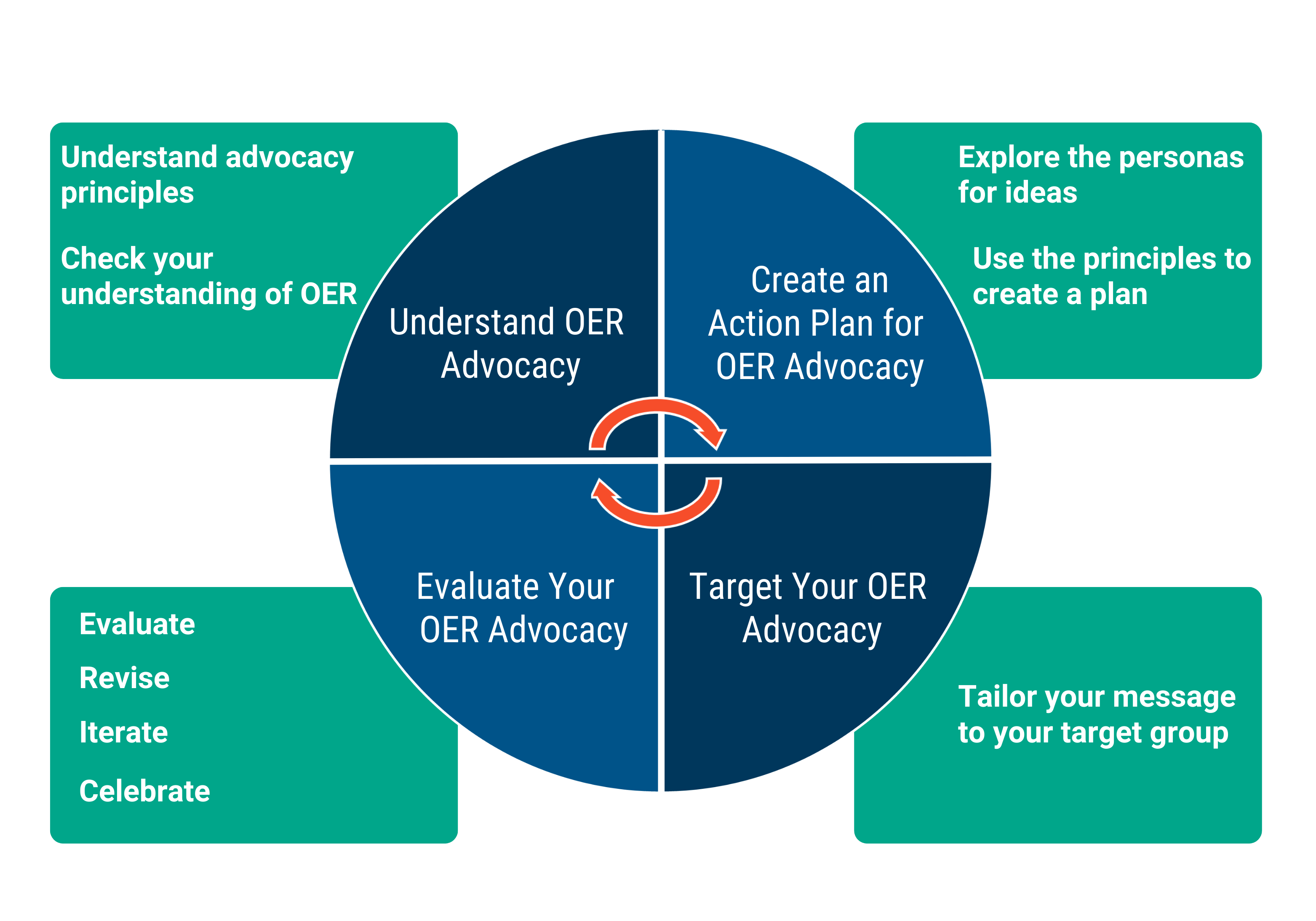 'OER Advocacy Process' in the CAUL OER Advocacy Toolkit by CAUL, licensed under a CC BY 4.0 licence.
We encourage others to extend this advocacy process to other areas of Open Science.
-
ينبغي للطلبةمعاينةطرح منشورات في المنتدى: 1
How should we advocate for developments in Open Science? Please post your suggestions which you feel are relevant to your setting.
-
-
You can gain a certificate of completion if you have posted your ideas to the two Discussion Forums