Introduction to Reflection in Public Health Practice
🧭 Frameworks of Reflection
This module introduces reflection frameworks as the foundations of reflection in a changing world.
A reflection framework is a simple, repeatable set of steps that helps you look back on an experience, make sense of it, and turn the insights into actions for next time.
This section explores a few different frameworks, also how we use these to learn through experience, adapt to change, and link our insights to our public health practice and the WHO Essential Public Health Competencies.
“The only constant in life is change” — Heraclitus
“No condition dey permanent” — West African Pidgin English proverb
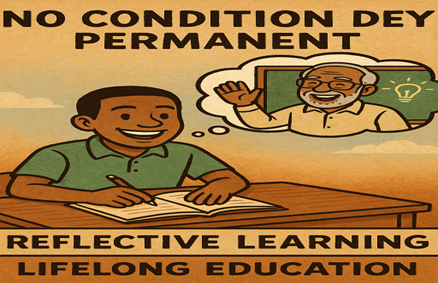
A recap of why reflection matters
Reflection supports lifelong learning and helps us respond to professional, political, and social change.
Through reflection, we:
-
Keep our knowledge up to date
-
Learn from success and mistakes
-
Strengthen our adaptability and curiosity
-
Improve our judgement and teamwork
💡 Tip: Reflection is not about criticism — it’s about curiosity and improvement.
🧠 How we learn from experiences
We learn best when we:
-
Take an active role in learning
-
Connect new ideas to real situations
-
Ask what worked, what didn’t, and why
-
Apply our insights in the next action
📝 Try this: After your next work task, write a 3-line reflection: What happened? So what? What next?
Learning Pathway Mentee
🪞 Pause & Reflect
Think of one situation this week that made you think.
Record your reflections under these headings:
-
Situation: What happened?
-
Actions: What did you do?
-
Insights: What did you learn?
-
Next steps: What will you do differently next time?
Create a short note (or a voice recording) and share it with your mentor at your next meeting.
Remember to:
-
Keep it anonymous (no patient identifiers).
-
Aim for 100–150 words or ≤90 seconds.
-
Focus on one specific change you can make.
Additional learning
- Watch this short video on reflective practice
Invite your mentee to share their reflections from Exercises 1&2 and discuss how their understanding has evolved.