
Anatomy of a research paper
Résumé de section
-
Although there are many different types of research and ways of publishing the results, there is a common theme in many types of research performed in Public Health. For each, there is a need to explore the 'anatomy' of the research - the population being studied, the exposure to a causative factor or an intervention, and the outcome being studied. We need to assess the features of each of these.
The GATE framework is a very useful way of depicting this (You can read more detail of the GATE framework here).
This picture shows the anatomy of a research paper, and thus what to look out for in a critical appraisal of the paper. Each aspect needs to be explored:
- the population - how it was selected;
- the intervention or possible exposure or causative factor - how they were chosen and measured and if this was biased;
- the comparison group - was there one and if so was it appropriate
- the outcome - was this appropriate, how was it measured and if this was biased
- the study time frame
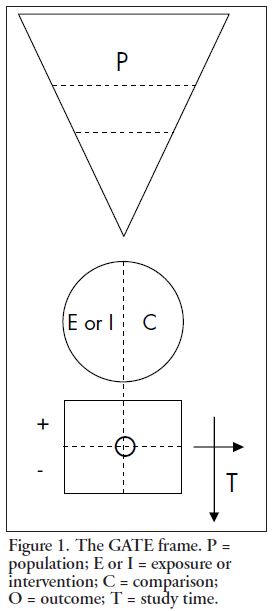
There is much more to consider in appraising a publication, but it all hangs on the basic anatomy of the research performed. The sections below each provide much more detail on how to appraise a published paper, but they will each amplify and extend the basic steps in the GATE framework