
Open Research Data
الخطوط العريضة للقسم
-
Here is an excellent summary of the rationale for open access to research data:
Open access to research data means that data from research is made available for others to find, review, and reuse, to the extent possible. This work is guided by the principle of “as open as possible, as closed as necessary” and is based on managing data in accordance with the FAIR principles.
The summary continues:
To be usable by others, data often need to comply with the so-called FAIR principles: they should be Findable, Accessible, Interoperable, and Reusable. However, these are general principles, not universal criteria. Given the varying requirements and needs of different research areas, the FAIR principles must be adapted to the scientific disciplines, fields, and practices in which they are applied.
The Open Access Network helps us understand the data we are talking about:
Research data come in a wide variety of forms and types. They comprise all (digital) data generated during the scientific process, for example, through measurements, simulations, interviews, source work, or code and software. The management of these research data has become an essential element of good research practice and is anchored in policies at many institutions. Whereas in the past, research data were often neglected as a mere accessory to publications, made available as a matter of form, or provided only upon request, a strong trend towards the independent and prominent publication of research data in an open format is apparent. In some disciplines, the publication of data is on its way to becoming the main outcome of scientific work.
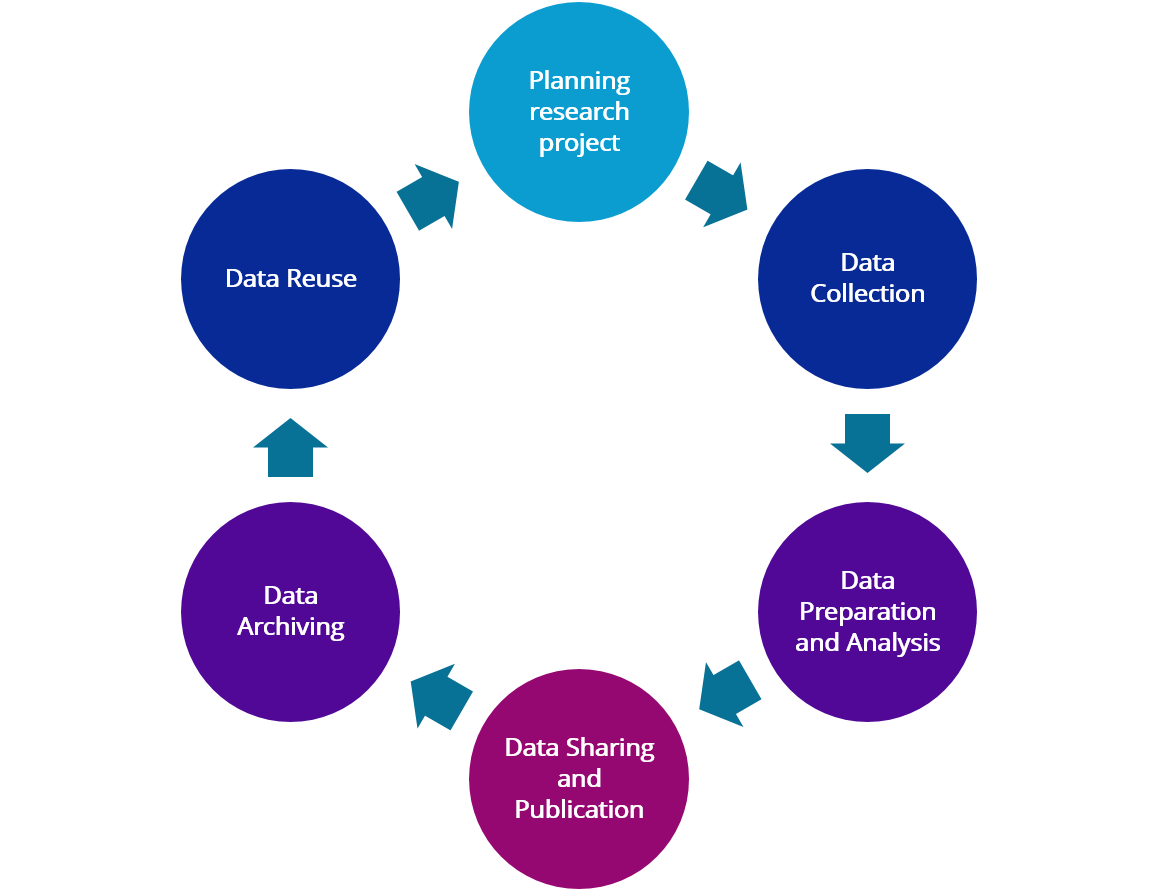
The figure depicts the Research Data Management Cycle from the Open Access Network CC BY 4.0 International.
Philosophical underpinnings
Where research is conducted using public funds, the resulting data, as for resulting publications, should be publicly available rather than hidden behind paywalls.
Extending FAIR to CARE
The FAIR principles have been extended into CARE principles. As described by Yana Suchikova and Serhii Nazarovets:
The CARE Principles (Collective Benefit, Authority to Control, Responsibility, Ethics) have emerged as a cornerstone for ethically managing data related to Indigenous peoples. Designed to complement the technical standards of FAIR (Findable, Accessible, Interoperable, Reusable), CARE emphasizes the cultural, ethical, and social dimensions of data stewardship. These principles ensure that data governance prioritizes community well-being, respects local values, and protects the rights of vulnerable groups. While initially focused on Indigenous data, CARE’s ethical imperatives can – and should – be extended to other vulnerable communities.
They describe the use of CARE principles as 'a universal standard for addressing the ethical complexities of data management in humanitarian crises and conflict-affected environments' - as in their current situation in war torn Ukraine.
As we will discuss later in this course, the just making science, including research data, open is not enough to ensure its equitable use. Ownership, ethics, power dynamics behind who gets access and the method of distribution all need to be considered in ensuring real openness.